THE BUILD-UP
Substrate
Fall and screed
Membrane
Bond coat
Tile
Grout and silicone
Six strata, one visible. Everything on this page is about the other five.
ABOUT TILING MURRUMBEENA
A tiler is judged on the finish and paid for the preparation
Tiling Murrumbeena is a tiling, waterproofing and tile repair trade working across Murrumbeena and the surrounding south-east suburbs. This page sets out how the work is checked, sequenced and finished — and why that order matters more than the tile.
THE WORK
Wet areas, interior floors, splashbacks, balconies and outdoor surfaces — new work and repairs to existing tiling.
What the trade actually involves
Quality finishing is a set of decisions, not a description
Four of them account for most of what people notice when they walk into a finished room, and all four are made before the last tile goes on.
SETTING OUT
Layout is decided before adhesive is mixed: where the full tiles land, which edge carries the cut, how joints run through a doorway and past a niche. A room reads as considered when the cuts were planned rather than discovered at the wall.
LEVEL AND FALL
Surfaces are flat where they must be flat and graded where they must drain. An even fall to the waste keeps water off the hob and out of the door track instead of leaving it to sit in a corner.
CUTS AND JOINTS
Openings for outlets and tapware are cut clean, not chipped. Joint width stays consistent across a wall and through internal corners, and movement joints go where the surface needs room.
SILICONE LINES
Corners and junctions take silicone, never grout — a straight, even bead that moves with the building and can be renewed later without touching tile.
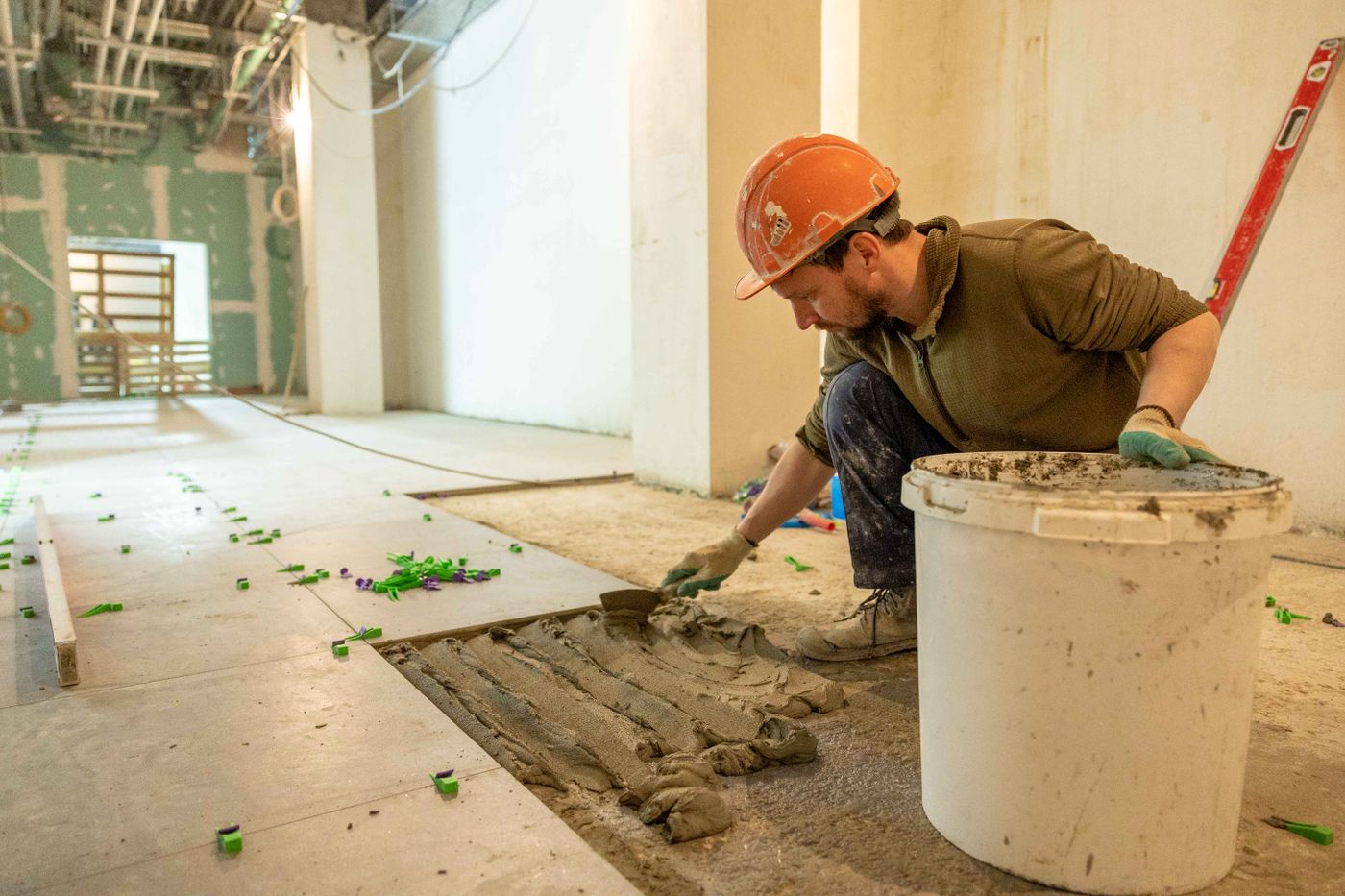
Reference photograph. Mortar being combed out and floor tiles set into it — the short, visible part of a job that only works because the substrate beneath it was checked, levelled and sealed first.
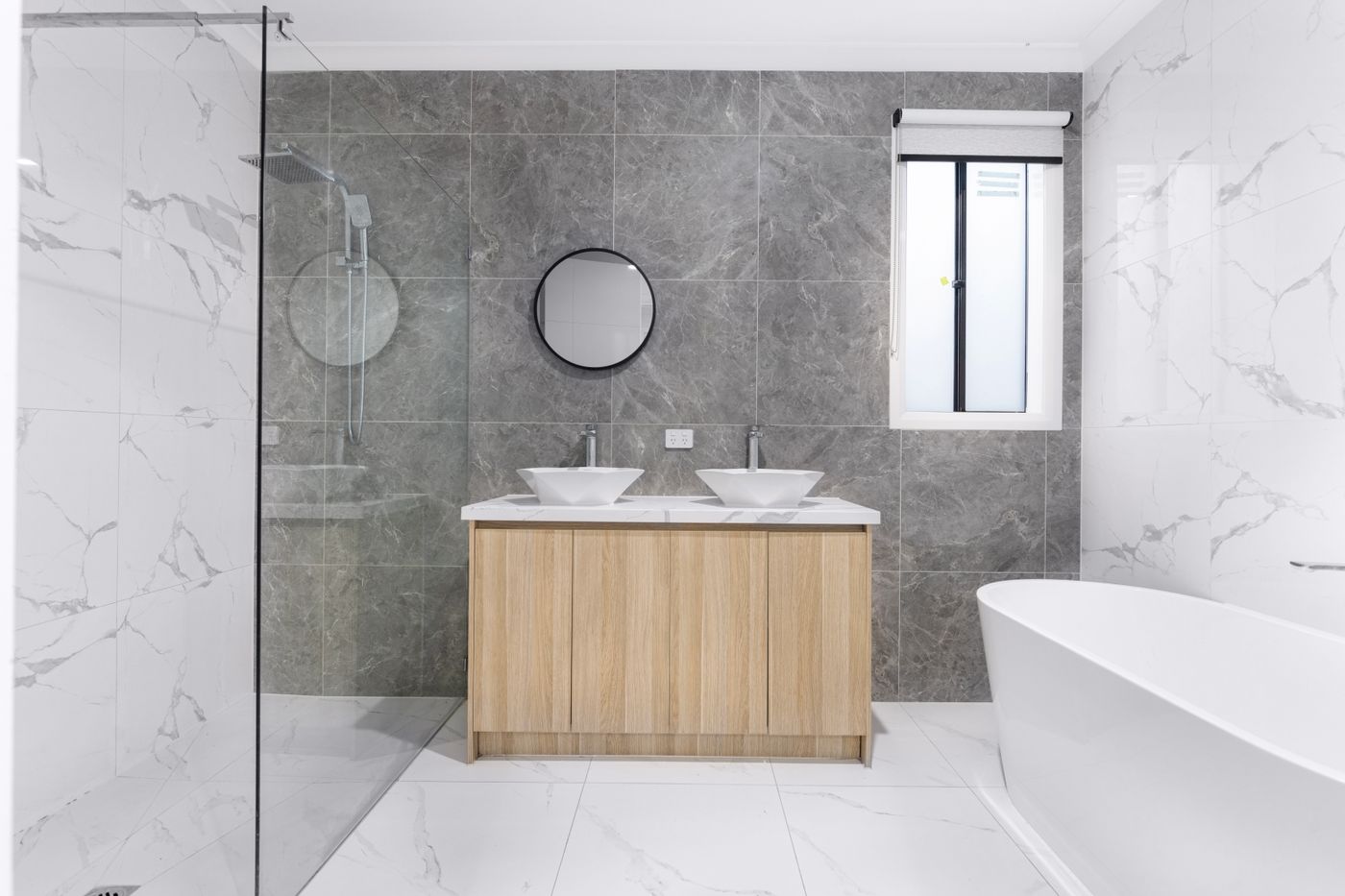
Who the work is for
WHERE WE WORK
Murrumbeena
CARNEGIE · HUGHESDALE · OAKLEIGH · CHADSTONE · MALVERN EAST · BENTLEIGH EAST · ORMOND · McKINNON
IN SHORT
Check the substrate. Set the fall. Waterproof and let it cure. Then tile, and finish the joints properly.