Home  /  FAQs

FREQUENTLY ASKED — TILING, WATERPROOFING & REPAIRS

The questions that come before the quote

Most enquiries arrive with the same handful of questions attached — about waterproofing, about tiling over what’s already there, about whether one tile can be replaced or the lot has to come up. Answered here, in plain terms.
Already know what you need? Request a quote.

WHAT THIS PAGE COVERS

Eleven questions, grouped by where they sit in a job — from the first enquiry down through the layers to maintenance.

01 – 03   Enquiring, quoting and where we work

04 – 06   Waterproofing, tiling over tiles and using a new shower

07   Leaking showers and how far a repair reaches

08 – 09   Cracked tiles, regrouting and resealing

10 – 11   Supplying your own tiles and choosing the material

01 — 03

Enquiring and quoting

THE PART BEFORE ANY TOOL COMES OUT

What should I include when I get in touch?

The suburb, the room, and what the surface is doing now. A rough size — a bathroom floor and one shower wall, a hallway of about twelve square metres — is more useful than an exact figure. If tiles are already chosen, the format and size shape the preparation far more than the colour does. For a repair, describe the symptom rather than the diagnosis: the stain appearing on the other side of the wall, the grout that keeps darkening, the tile that sounds hollow underfoot. Send it through the quote form.

How is a written quote put together?

On site wherever the work allows it. The scope is measured, the substrate is read for flatness, movement and fall, and the extent of waterproofing is established before anything is priced. Tile format matters: large panels need a flatter plane and more correction underneath than a standard wall tile. Access, protection of finished areas and the removal of what comes out all sit in the same number. The quote sets out what is included, so the line between preparation and finish stays visible. More on the sequence in How We Work.

Do you work outside Murrumbeena?

Yes. Murrumbeena is the base, and the regular run takes in Carnegie, Hughesdale, Oakleigh, Chadstone, Malvern East, Bentleigh East, Ormond and McKinnon — residential work and small commercial fit-outs alike. The full district is listed on Service Areas.

04 — WET AREAS

Why does waterproofing have to go in before the tile?

Because a membrane is continuous and tile is not. Water passes through grout — it always has. The membrane behind and beneath the tile is what collects it and returns it to the waste. Once tile is fixed, that layer can no longer be formed into the corners, junctions and floor waste where failure actually begins, which is why it isn’t a step that can be added afterwards without removing everything above it. The full sequence sits on the Waterproofing page.

05 — EXISTING SURFACES

Can you tile over existing tiles?

On a sound, well-bonded floor outside a wet area it can be the sensible option: the surface is tapped for drummy tiles, heights against doors and thresholds are worked out, and the old glaze is prepared so the new bed can grip. A shower or bathroom floor is a different question, because the membrane sits under the original tile and its condition can’t be confirmed from above. See Floor Tiling or Renovation Tiling.

06 — CURE TIME

How soon can a new shower be used?

Later than most people hope, and the products decide it rather than the calendar. The membrane needs its full cure before tiling, the adhesive has to set before grouting, and grout and silicone each want their own drying period before water reaches them. Those waiting times come from the manufacturer of the system used on your job and are confirmed on site. Using a wet area early is one of the quiet causes of early failure.
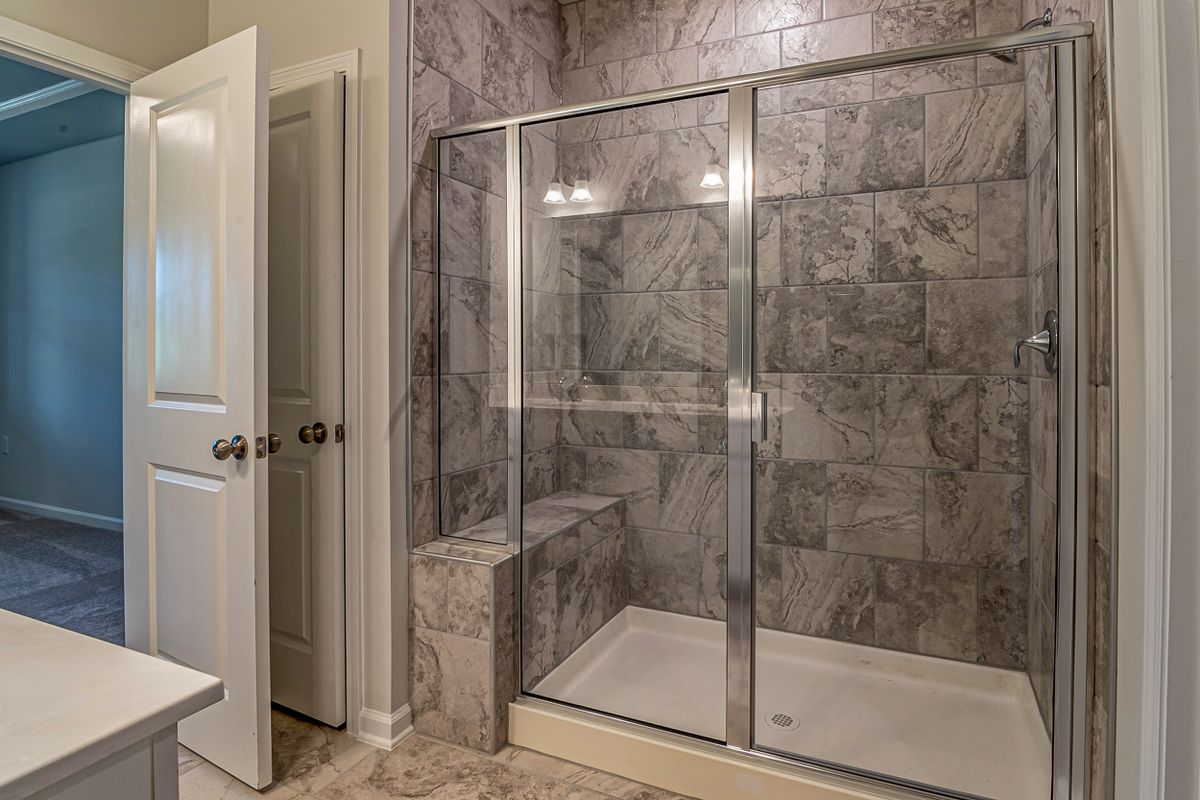
Completed bathroom shower enclosure with grey marble-effect wall tiles, clean grout lines, a built-in bench and glass doors.

REFERENCE — A FINISHED ENCLOSURE: CLEAN JOINTS, SEALED JUNCTIONS, NOTHING TO READ ON THE SURFACE

07 — LEAKS

My shower leaks. Does the whole bathroom have to come out?

Not always, and the answer depends on where the water is escaping rather than how alarming the stain looks. Leaks trace back to a short list of places: perished silicone at the wall-to-floor junction, cracked or missing grout, the connection around the floor waste, or a membrane that was poorly detailed or has since failed. The first three can often be repaired without stripping the room. A failed membrane behind the tiles cannot — it has to be reached.
So the job starts with finding the layer at fault instead of replacing everything above it. Leaking Shower Repairs explains the diagnosis, and the guide on where water actually escapes covers the same ground from the membrane’s side.

08 — REPAIRS

Can a single cracked tile be replaced?

Often, yes — the real question is why it cracked. A tile broken by something dropped on it is a straightforward swap where a matching spare exists, and where it doesn’t, a close match in a discreet position beats an obvious one in the middle of the room. But a crack running in a line across several tiles, or tiles that sound hollow when tapped, points at the adhesive bed or at movement in the substrate below. Replacing the surface without reading the cause only resets the clock. Tile Repairs, and the guide to reading the cause.

09 — MAINTENANCE

What's the difference between regrouting and resealing?

Regrouting is removal and replacement: the old grout is cut out to depth, the joints are cleaned, new grout is packed in, and the silicone in the internal corners and at the wall-to-floor junction is usually renewed at the same time. Sealing is a surface treatment applied over grout or porous tile to slow staining — maintenance, not repair. Sealing over cracked, crumbling or missing grout preserves the look for a while and changes nothing underneath. See Regrouting and when new grout is enough.

10 — SUPPLY

Can I choose and supply my own tiles?

Yes. Plenty of clients enjoy the choosing and buy their own, and that works well provided the quantity allows for cuts, wastage and a few spares set aside for future repairs. Where a selection doesn’t suit the surface it’s going on — an interior-rated tile on an exposed balcony, a polished finish on a shower floor, a large panel over a substrate that would need extensive correction first — that gets raised before work starts rather than after. Related: Kitchen Splashbacks and Large Format Tiling.

11 — MATERIAL

Porcelain or ceramic — does it matter?

On a protected wall, rarely. On floors, in showers and anywhere outside, it decides how the tile absorbs water, how it wears and how it behaves through a Melbourne summer into a cold week. The comparison is set out in Porcelain vs Ceramic, with the exterior side covered under Outdoor Tiling.

A question that isn't here is usually a question about your particular room

Describe what you’re looking at — the room, the suburb, and what the surface is doing — and the answer can be specific instead of general.