THREE MATERIALS, THREE JOBS
Grout
Rigid, cement-based, fills the joint between two tiles and takes the wear.
Silicone
Flexible, sits where two planes meet, and is allowed to move.
Membrane
The waterproof layer under the bed. Nothing done from the face replaces it.
Two of these can be renewed from the surface. The third cannot.
GUIDE — GROUT, SILICONE & TILE MAINTENANCE
New grout fixes the joint — it can't fix the layer beneath it
Grout is the narrowest and softest material on a tiled surface, so it is the first to show its age. Sometimes a fresh joint is genuinely the whole answer. Sometimes it is a clean surface laid over a fault sitting several layers down.
MIXED TOO WET, RAKED TOO SHALLOW, OR ASKED TO ABSORB MOVEMENT IT WAS NEVER MEANT TO TAKE
Why grout stains, cracks and crumbles
Cement grout is porous. Soap film, body oils and mineral deposits settle into the surface and darken it, which is why the wettest band of a shower wall greys off while the joints near the ceiling still look new. That is staining. It is unattractive, it is not structural, and cleaning will often recover more of it than people expect.
Crumbling is a different event. Grout powders out when it was mixed too wet, when it was pushed into a joint that still had dust in it, or when it is being asked to take movement. And cracking that follows a straight line — along the base of a wall, around the edge of a hob, across the middle of a floor — is rarely about the grout at all. It is the surface reporting something happening underneath.
Two problems that look identical from a metre away
Stand in the doorway and a stained joint and a failed joint read the same: dark lines in a wall you would rather not look at. The difference shows up when you get close and run a fingernail along the joint. Grout that is intact but discoloured stays put. Grout that has failed gives up sand, opens at a corner, or sits noticeably below the face of the tile.
SURFACE ONLY
Even colour change across the wet zone, joints still full and level with the tile, no gaps at corners. A clean and reseal, or a regrout for appearance rather than repair.
JOINT FAILURE
Sandy residue in the base of the shower, joints sunk below the tile face, a line that has opened at a corner or along a hob. The joint has stopped doing its job and water is getting past the finish.
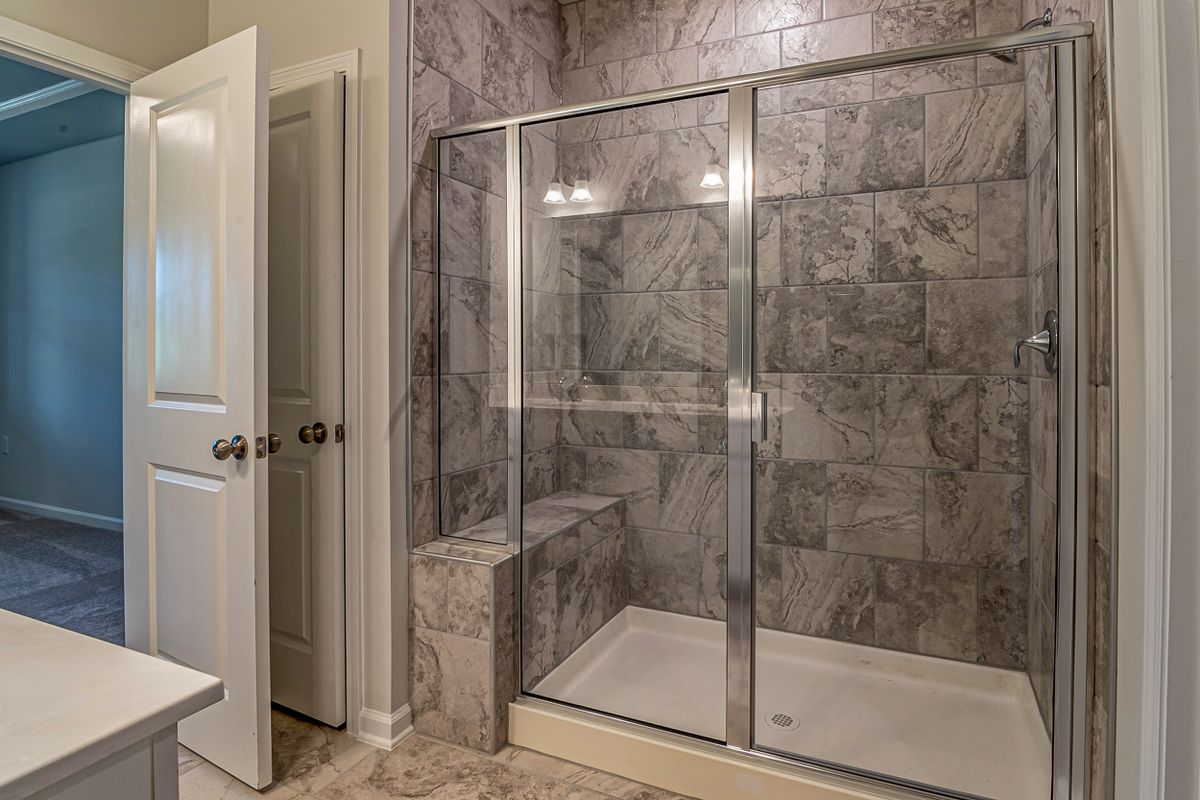
Reference photo. What tells you a wet area has been finished properly is the width and depth of the joints where the wall meets the bench and the floor — not the tile itself.
Three stages, and the first one is the work
Grout cannot be skimmed. New grout laid over old has nothing to grip and lifts out in sheets, usually within a season.
RAKE OUT
The old joint is cut out to a usable depth with a blade or multi-tool, following the line rather than riding over it. Tile edges are protected as the joint is opened, because a chipped arris is a repair of its own.
CLEAN AND DRY
Dust is what stops a bond. Joints are vacuumed out and left dry, and any old silicone in the corners is stripped back completely rather than grouted across — a corner filled with grout will only crack again.
REFILL AND CURE
Fresh grout is worked in from two directions so the joint packs solid, then cleaned back before it sets hard. Silicone goes in last, once the grout has cured, and the area is kept dry while it does.
Silicone is not grout that bends
Every internal junction in a wet area moves a little: wall to wall, wall to floor, around a hob, along the edge of a bath. Rigid grout in those positions has no way to absorb that, so it cracks, and a cracked corner is an open path straight past the finish. Silicone sits there instead because it can flex and stay sealed.
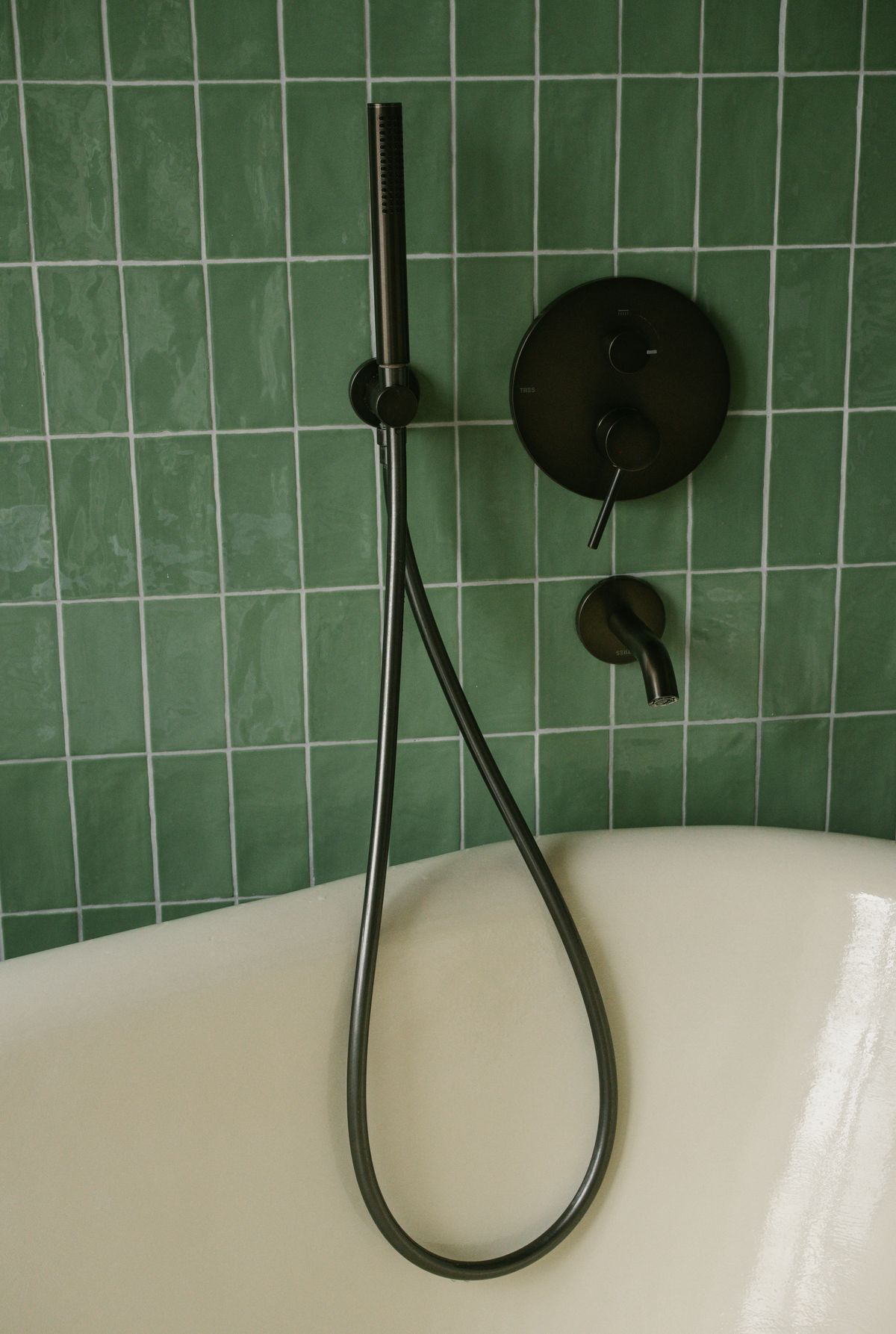
When regrouting would only mask the real fault
The honest test is repetition. If a joint has already been renewed once and has opened again in the same place, the movement or the moisture causing it has not gone anywhere, and filling the gap a second time only resets the clock.
LOOK FURTHER IF
Paint, plaster or skirting is blistering on the other side of the shower wall.
A tile sounds hollow when it is tapped, or a row of them does.
Grout is missing along one straight line rather than scattered across the wall.
Water sits on the floor instead of finding the waste.
A joint reopened within months of being renewed.
Not sure which of the two you're looking at
Describe what you can see — where the grout is going, how long it has been that way, and whether anything is damp beyond the bathroom. Most of the time that narrows it to a regrout or to a repair before anyone is on site. Tiling, waterproofing and tile repair across Murrumbeena, Carnegie, Hughesdale, Oakleigh, Chadstone, Malvern East, Bentleigh East, Ormond and McKinnon.