Grout is the layer that shows failure first
Grout and silicone are the only strata of a wet area you can renew without touching the tile. They are also the first to report that something beneath them has moved. Regrouting and silicone renewal across Murrumbeena and the surrounding south-east suburbs.
TECHNICAL NOTE
Grout fills the joint. Silicone absorbs movement. Putting one where the other belongs is the most common reason a bathroom looks tired again a year after it was cleaned up.
Grout renewal, not a coat of colour over the top
Regrouting means the existing grout comes out of the joint rather than being smeared over. The old material is raked to a consistent depth, the tile edges are cleaned back to something sound, and fresh grout is packed so the joint is full from the face inward. A joint filled only at the surface cracks along the same lines it cracked along before.
Silicone is a separate material doing a separate job. It belongs where two planes meet — internal corners, the floor-to-wall junction, around the waste and behind tapware — because those joints move. Grout in a moving junction will always crack, so renewing it is part of the same visit, not an upsell.
How the joints are worked
Three passes across the same lines, in an order that gives the new grout something clean and dry to bond to.
01 — RAKE OUT
Old grout is cut out to an even depth with a blade or oscillating tool, tile edges kept intact. Anything found along the way — a drummy tile, a hairline crack running through the body rather than the joint — is flagged before new grout goes near it.
02 — CLEAN AND DRY
Dust, soap residue and old sealer come out of the open joints. Contaminated or damp edges stop new grout bonding, so the joints are washed, vacuumed and left to dry before anything is mixed.
03 — GROUT, THEN BEAD
Joints packed full, tooled, washed off before the haze sets. Corners and junctions are masked and finished with a fresh silicone bead once the grout has cured.
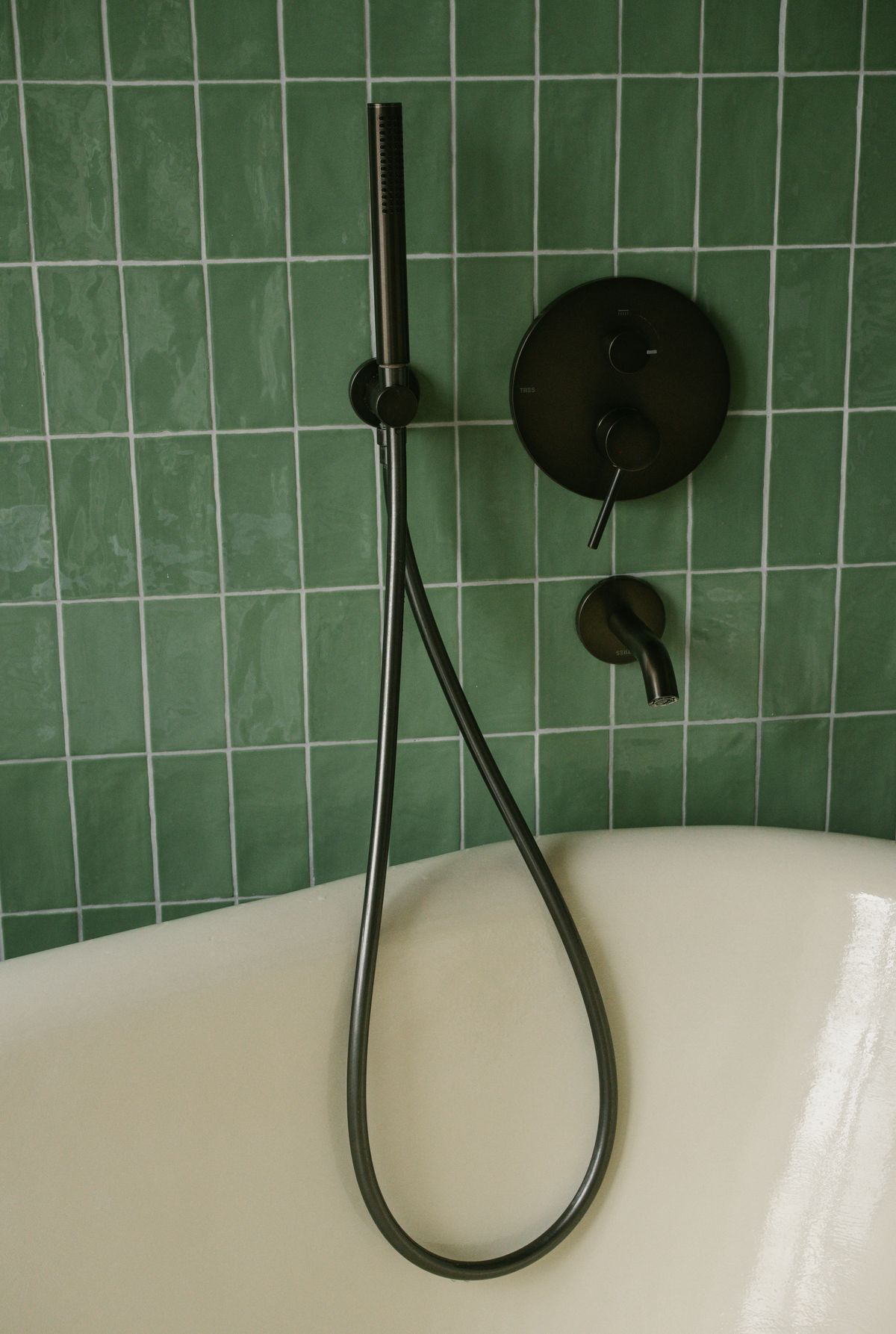
REFERENCE PHOTOGRAPH
Evenly filled joints and a straight, uninterrupted bead where the tile meets the bath. This is what a regrout should read as from a metre away — and still hold up at ten centimetres.
When new grout finishes the job
Staining, discolouration and mould held in porous joints that no longer clean up
Grout that was under-packed or over-watered at installation and is now powdering
Silicone that has perished, lifted at one edge or gone black behind the face
Chipped joints around a waste, a bath edge or a splashback cut-out
Sound, well-fixed tiling that simply looks tired against a newer fitout
When it's the visible end of something else
COMMON QUESTIONS
What gets asked before a regrout
Can the grout colour change?
Yes. Because the old grout is removed rather than coated, the new joint can be a different colour entirely. Darker joints hide traffic marks on floors; lighter joints let a wall read as one surface instead of a grid.
Does the shower have to stay out of use?
Grout and silicone both need to cure before water touches them, so the area is left out of service until they have. How long that takes depends on the products used and the conditions on the day, and it is set out before work starts rather than discovered afterwards.
Can just one section be regrouted?
It can, and for a single cracked run or one failed corner it often makes sense. Across a full shower, patches rarely disappear — grout of the same nominal colour cures differently against joints that have been in service for years.
Tell us what the joints are doing
Where the grout is cracking or the silicone is lifting — shower, floor junction, splashback, balcony threshold — and whether anything sounds hollow when you tap it. That is usually enough to say whether this is a regrout or a repair before anyone stands in the room.