Home  /  Services  /  Bathroom Renovation Tiling
Service 02 / 11  —  Wet-area rebuild

Strip it back and the real job appears
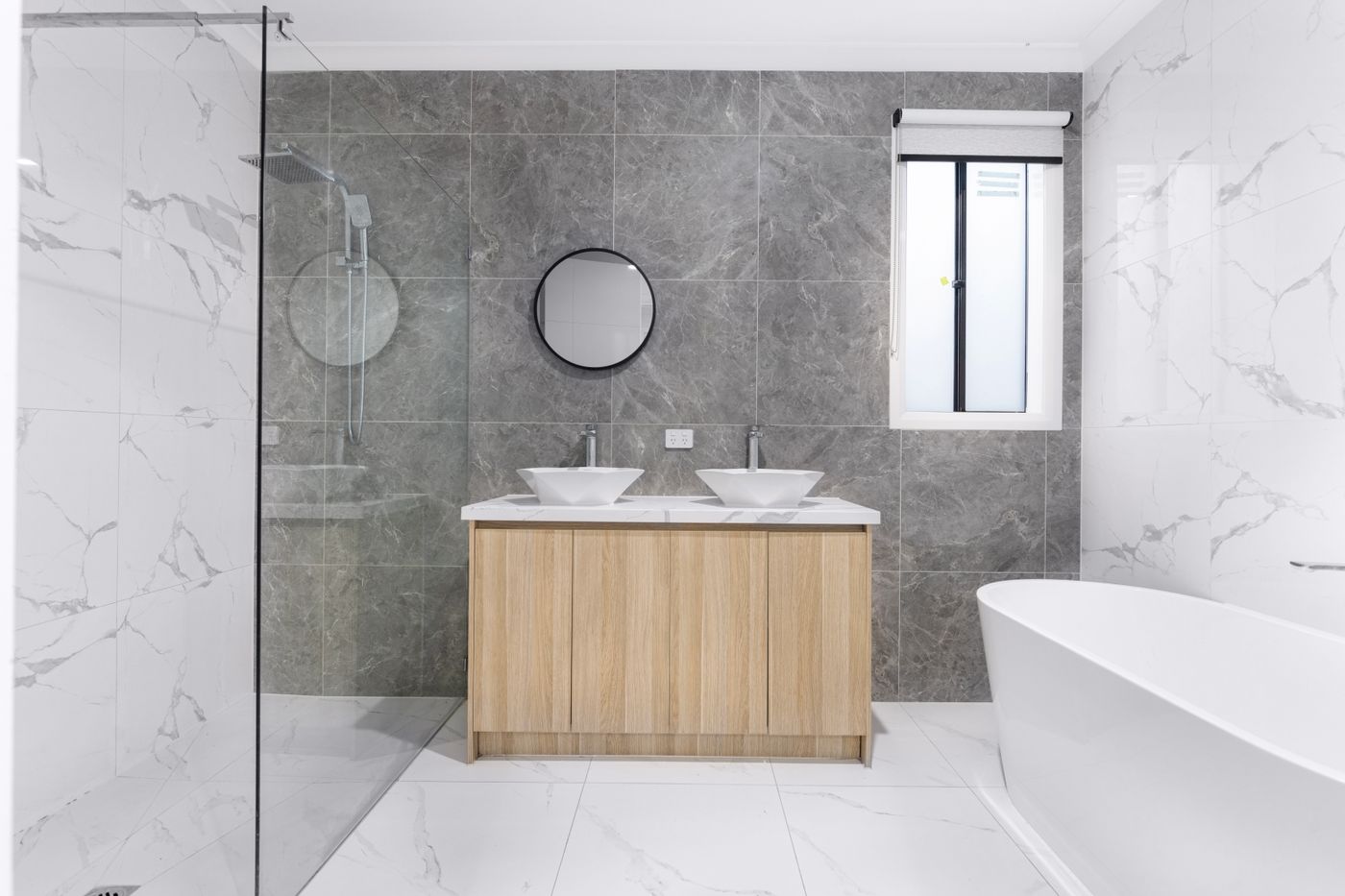
A bathroom renovation is a sequence, not a change of surface. Old tile, screed and membrane come off, the exposed substrate is corrected, falls are re-established, and waterproofing goes down before a single tile is fixed.
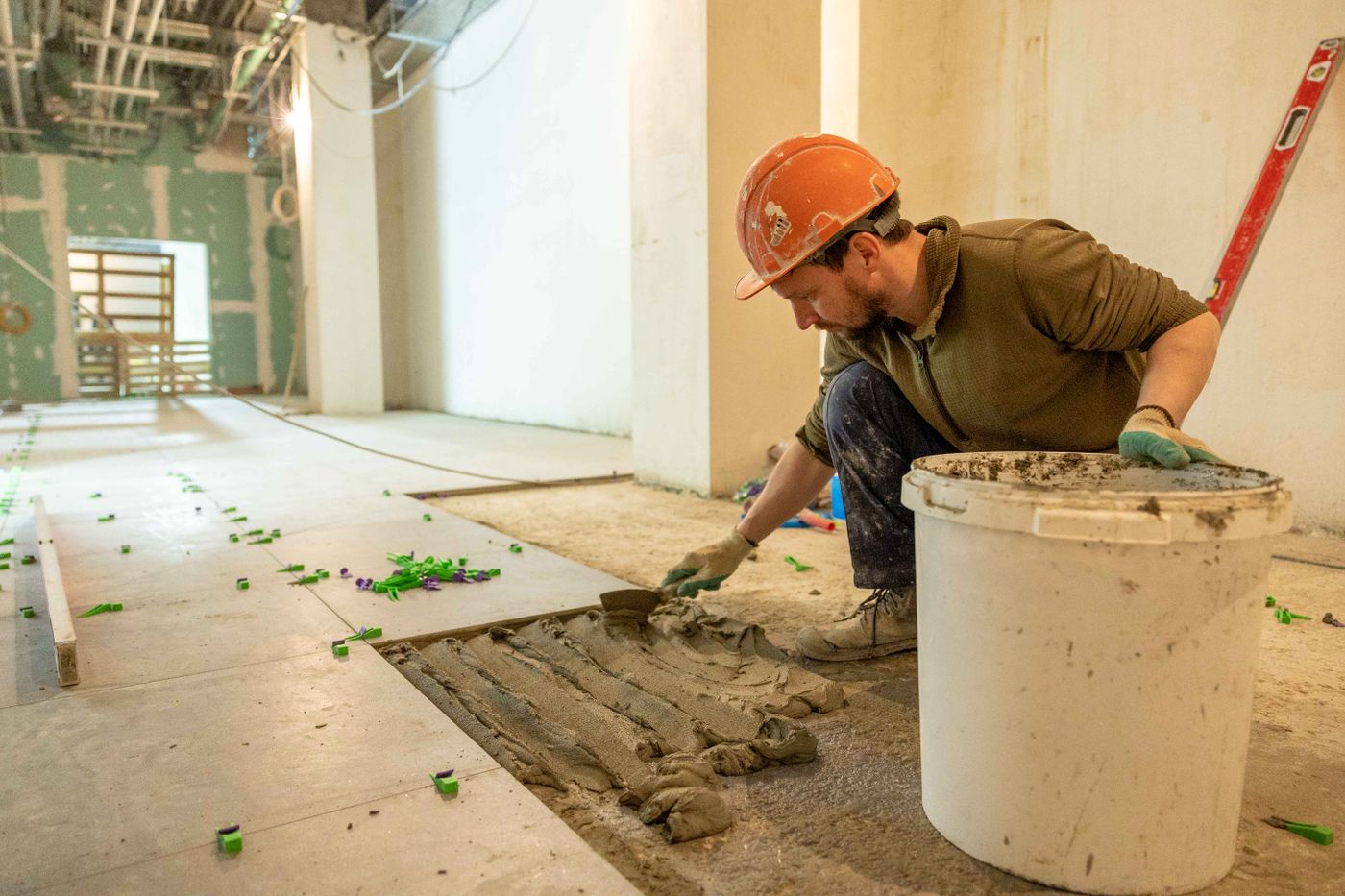
A construction worker wearing a hard hat and gloves spreads mortar while laying floor tiles in an unfinished interior.
Technical note
A renovation quote is an estimate of the visible work plus an allowance for what the old surface is hiding. Nobody can price a rotted sheet or a failed fall through a wall of tile.

What comes off before anything goes on

Removing tile in an existing bathroom takes the bond coat, the old membrane and usually part of the screed with it. That is the point. Until the substrate is bare you are looking at guesswork — soft sheeting behind the shower, a floor that drains away from the waste, a hob built up over an earlier repair, or a wall that sits out of plumb by enough to show in a straight grout line.

Once the room is stripped, the condition of the frame, sheeting and slab is assessed and the corrections are agreed before waterproofing starts. Plumbing and electrical changes belong in this window too: waste positions, mixer heights, niche framing and drainage all have to be final before a membrane goes over them. Every later stage inherits whatever is left at this point, which is why a renovation is sequenced backwards from the finish you want.

Preparation & process

The order the work happens in

Stage 01 — Strip-out
Tile, adhesive, old membrane and loose screed are taken back to a sound substrate. Services are opened up, waste and mixer positions are confirmed, and the bare room is measured for level, plumb and existing fall.
Stage 02 — Substrate
Damaged sheeting is replaced, junctions are made rigid, and the floor is screeded to a continuous fall toward the waste. Walls are made flat enough for the tile format chosen, not merely flat enough to paint.
Stage 03 — Membrane
Primer, bond breakers at the movement joints, then membrane coats carried up the walls and into the floor waste. The room stays out of use while it cures — tiling over a green membrane undoes the layer entirely.
Stage 04 — Tile
Setting-out is marked first so cuts land where they read best. Tiles are fixed, levelled and grouted, then corners and junctions are siliconed rather than grouted so movement has somewhere to go.

Why a renovation is not the same as tiling a new surface

On a new build the substrate arrives square, dry and known. In a renovation it arrives with history: a previous waterproofer’s decisions, a plumber’s patch, twenty years of movement. The tiling itself is the shortest part of the job — the value sits in reading what the strip-out exposes and correcting it before the layers close over again.

It also changes how the trades interlock. Plumbing rough-in, any framing for a niche or hob, and the waterproofing all have to be complete and cured before fixing begins, so the room is unusable for a stretch in the middle rather than at the end. Planning that gap honestly is more useful than promising a fast finish.

What the renovation covers
Walls, shower walls, niches and hobs — see bathroom tiling
Screeds, falls and floors — see floor tiling
Full wet-area membrane — see waterproofing
Keeping an existing bathroom going instead — see regrouting

Staging and disruption

The questions that decide how a renovation is scheduled, answered before the tools arrive.

Can the quote be fixed before the strip-out?

The tiling, screeding and waterproofing scope can be quoted from the layout and tile selection. What cannot be seen — the condition of sheeting, framing or the existing slab — is identified on the day of the strip-out and discussed before the work continues.

Is the bathroom usable while the work runs?

No. From strip-out through to grouting the room stays closed, and the membrane cure period in particular cannot be walked on or rushed. Planning a second bathroom or an alternative arrangement for that stretch is part of scheduling the job.

Do the tiles have to come off, or can we tile over?

Tiling over existing wet-area tile buries an unknown membrane and adds height at the door and the floor waste. If the goal is a renovated bathroom rather than a cosmetic refresh, the old layers come off. Where the existing finish is sound, regrouting or tile repairs may be the better answer.

Who coordinates the plumber and waterproofer?

The tiling and waterproofing stages are sequenced together so the membrane is applied to a finished substrate with services already set. Where other trades are engaged directly by the owner, their timing is agreed up front so nobody works over wet membrane or opens a wall after it has been sealed.

Planning a bathroom in Murrumbeena or nearby?

Renovation tiling and waterproofing across Murrumbeena, Carnegie, Hughesdale, Oakleigh, Chadstone, Malvern East, Bentleigh East, Ormond and McKinnon, for homes and small commercial wet areas. Send the room dimensions, your tile choice if you have one, and what the existing bathroom is doing now.