Outside, the tile has to shed water — not hold it
Alfresco areas, patios, paths and pool surrounds across Murrumbeena and the surrounding south-east suburbs. Exterior-grade adhesives and grouts, fall taken away from the house, slip resistance that still works wet, and joints that let the surface move in the heat.
WHERE THIS APPLIES
Alfresco areas and covered outdoor rooms
Patios, courtyards and garden paths
Pool surrounds and wet edges
Entry steps, landings and thresholds
Ground-level slabs, existing or newly poured
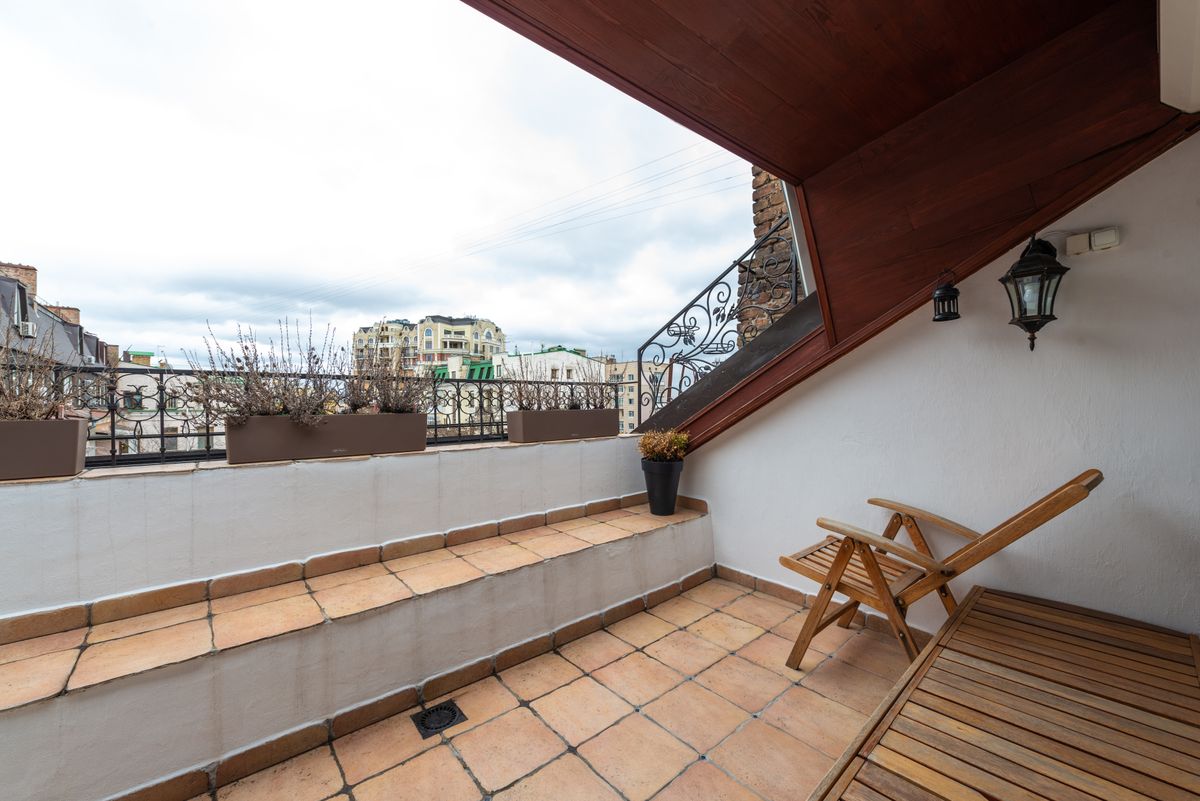
REFERENCE PHOTOGRAPH
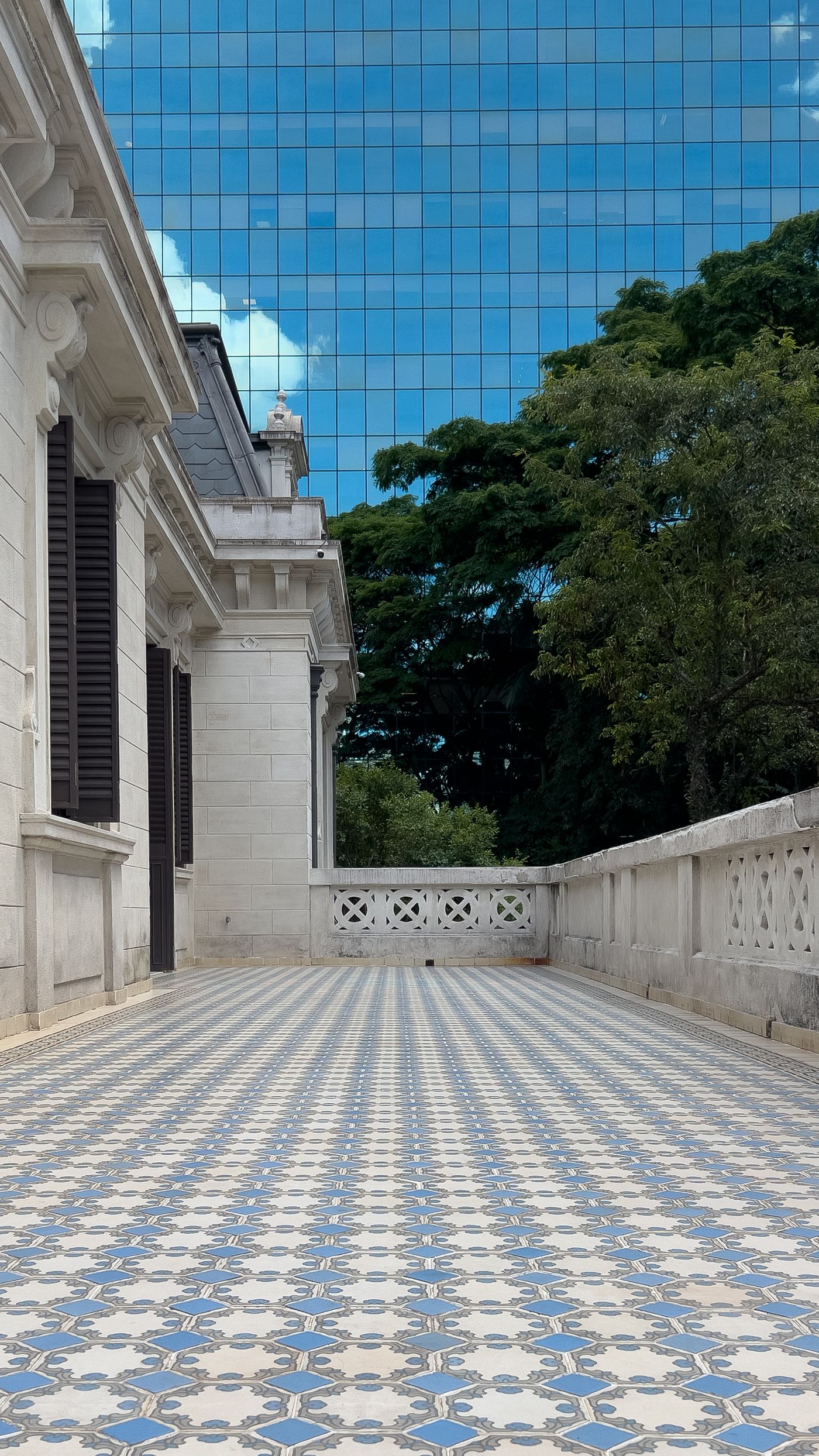
A ground-level terrace laid to fall, with the perimeter closed at the steps and planters — the two places an outdoor floor most often lets water in.
OUTSIDE, EVERY JOINT IS A DRAINAGE DECISION
The slab decides the job, not the tile
Most outdoor tiling here happens over concrete that already exists — an old patio, a path, the slab under a rebuilt alfresco. Before anything is priced, that surface gets read: how much fall it has and in which direction, whether it ponds in patches after rain, whether it is cracked or coated with sealer or paint, and whether it moves at an existing joint.
A sound slab that already drains is usually tiled directly, once it has been ground or profiled and primed. A slab that holds water is corrected first — a bonded topping laid to a new fall, taken to a drain, a spoon drain or open ground rather than back toward the house. A freshly poured slab needs drying and shrinkage time before tile goes over it; fixing too early pushes that early movement straight into the grout lines.
SPECIFICATION
Specified for outside, or simply used outside
A TILE SPECIFIED FOR IT
Low water absorption, so wet-and-dry cycles don’t work into the body.
A textured or structured face that still grips underfoot when wet.
Colour and surface that hold up under direct sun.
Thickness and edge strength suited to outdoor traffic and furniture.
A TILE THAT ONLY LOOKS THE PART
A polished or lightly glazed face that turns slick the moment it rains.
A porous body that drinks in leaf litter, soil and pool water.
A finish that fades unevenly where the sun lands hardest.
Edges that chip under chairs, planters and foot traffic.
PREPARATION AND SEQUENCE
Five stages, in order. Skipping one rarely shows on handover — it shows two winters later.
How an outdoor area is built up
01 Read the surface. Fall and direction, ponding, cracks, coatings, existing joints and where water currently goes.
02 Correct the fall. Grinding, profiling and priming, or a bonded topping laid to shed water away from the building and toward a drainage point.
03 Detail the wet edges. Thresholds, door abutments and any area sitting over enclosed space are treated as a membrane job before tiling — see Waterproofing.
04 Set out and fix. Exterior-grade flexible adhesive, full bed contact and no voids under the tile for water to sit in. Oversized formats are handled as per Large Format Tiling.
05 Joints and grout. Exterior grout in the field, perimeter and movement joints left free of grout and sealed flexibly so the surface can expand in the heat.
UNDERFOOT AND IN FULL SUN
Around water, the surface matters more than the pattern
A pool surround, a shaded courtyard and a north-facing patio are three different jobs in the same material. Wet edges want a textured face and generous fall. Dark tiles gain real heat in an open yard. Long uninterrupted runs need breaks in the surface so summer expansion has somewhere to go instead of pushing tiles up at the perimeter.
Questions that come up before an outdoor job
Can you tile over an existing concrete patio?
Often, yes. The slab has to be sound, clean and draining in the right direction. Coatings and sealers are removed, the surface is profiled and primed, and any ponding is corrected with a topping before tiling. If the slab is moving at a crack, that movement is dealt with first rather than tiled over.
Does an outdoor area need waterproofing?
Why do outdoor tiles come loose when indoor ones don't?
Heat, water and movement. Voids in the adhesive bed hold water, joints without a flexible break take the load of expansion, and interior-grade products outside simply fail earlier. Full contact under the tile and joints in the right places prevent most of it.