GUIDE — UNDERSTANDING TILING COSTS
The figure is set by what the old bathroom is hiding
Two quotes for the same bathroom can read very differently. Area, tile choice, the state of the substrate once it is exposed, the extent of waterproofing and the number of cuts each move the number — this is how they work.
THE SHORT VERSION
Square metres set the floor of a quote. Preparation, waterproofing and cutting set the rest of it — and only the first of those is visible before work starts.
Area is where a quote starts, not where it lands
Every bathroom quote begins with measurement: wall area, floor area, the height the tile runs to, whether the shower is a simple recess or carries a niche and a set-down. That part is arithmetic and two tilers will land close to each other on it. What separates the totals is everything measurement does not describe — how flat the substrate is, how many layers have to be rebuilt before a tile is set, and how much of the day goes to cutting rather than fixing.
Three things that move the number before a tile is fixed
TILE SIZE AND MATERIAL
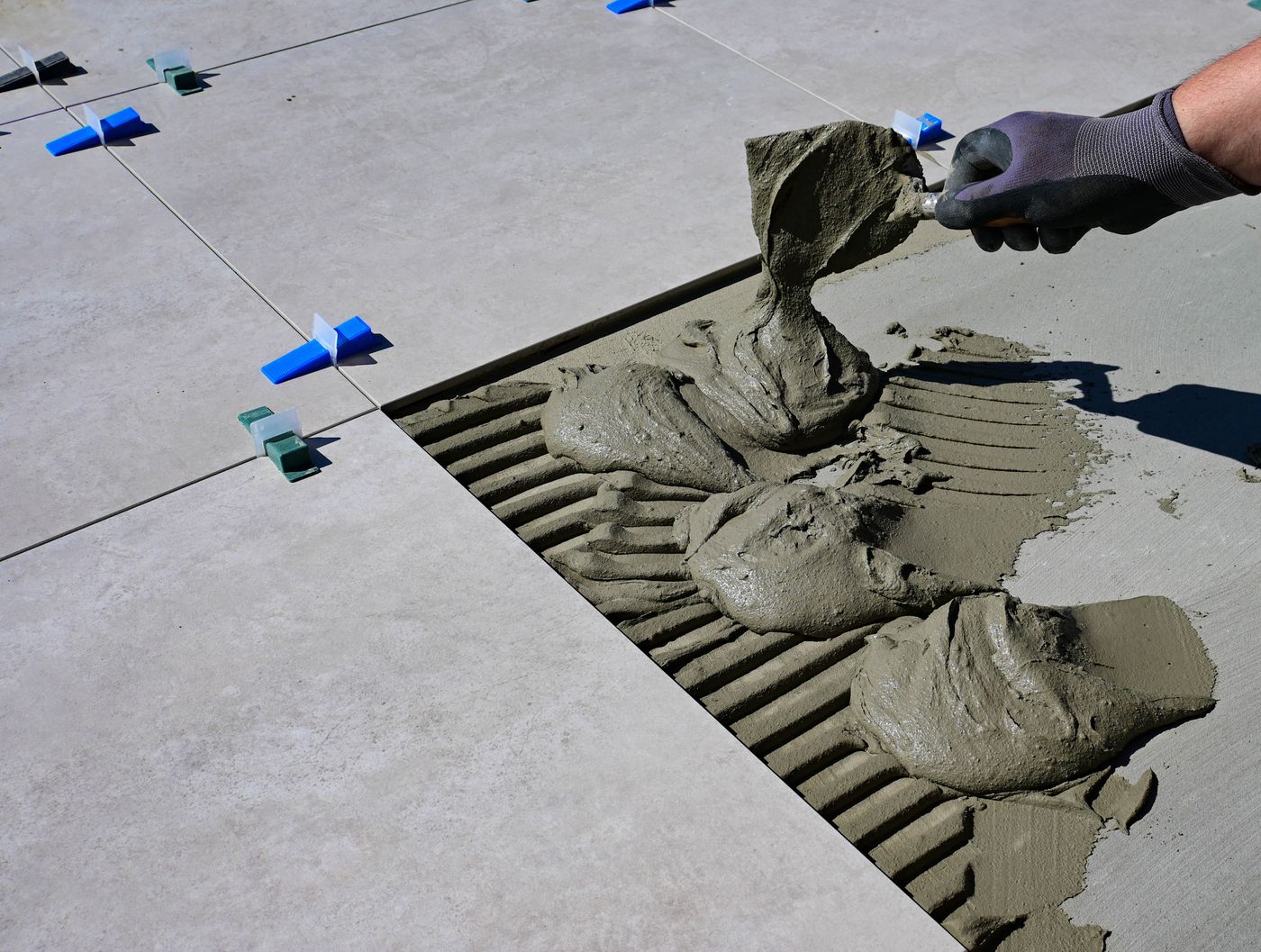
A large porcelain panel covers ground quickly but wants a flatter bed, two sets of hands and back-buttering. A mosaic covers slowly and multiplies joint work. Stone adds sealing and slower cutting. The tile changes the labour behind it, not just the material.
THE SUBSTRATE ONCE EXPOSED
Until the old lining comes off, substrate condition is an informed estimate. Soft sheeting beside a shower, a floor out of level, a screed that no longer falls to its waste — each has to be corrected before anything waterproof goes on.
WATERPROOFING SCOPE
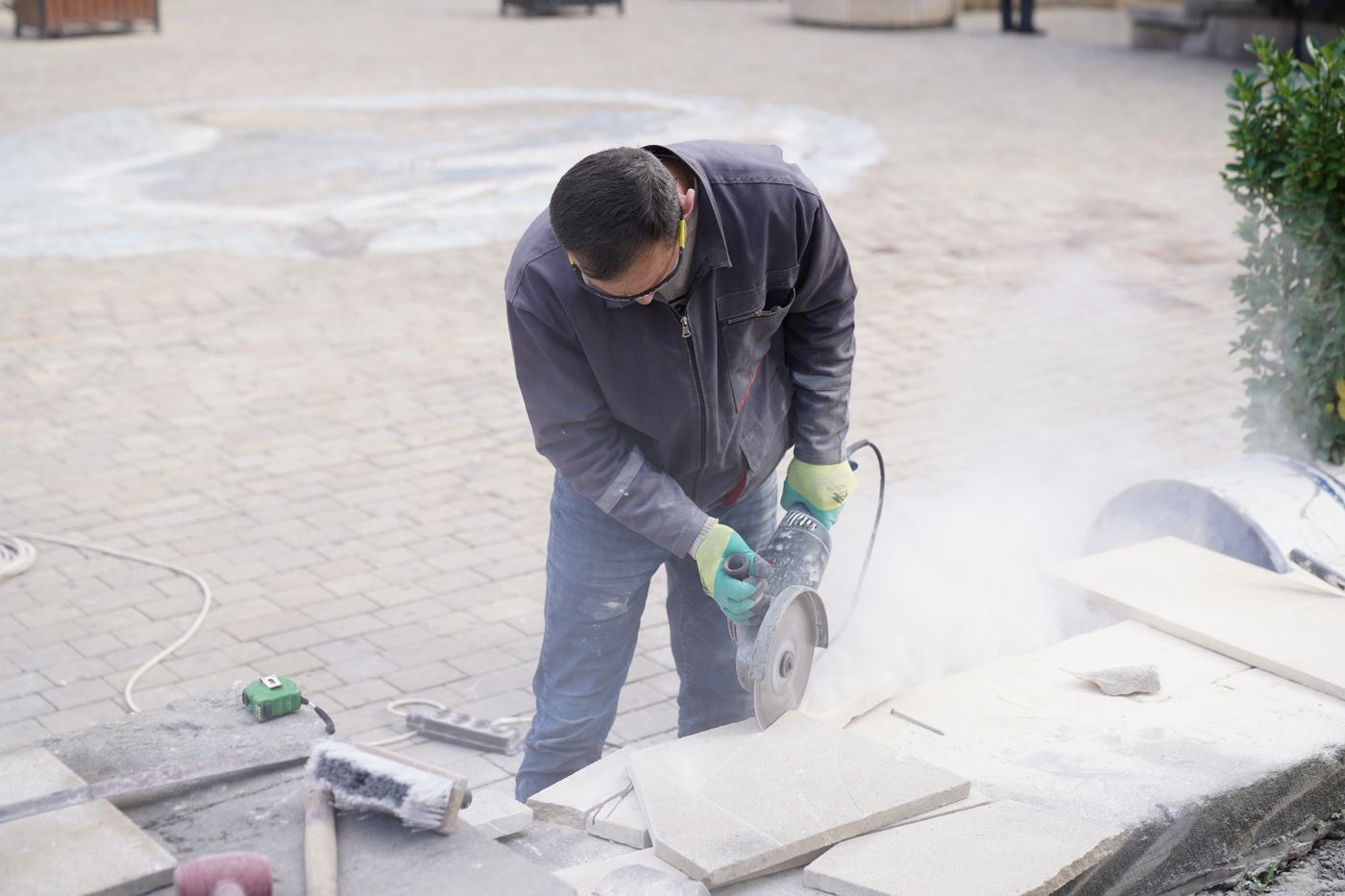
Reference photo — cutting, not fixing, is where the hours collect on a room full of penetrations.
Cuts, penetrations and getting materials in and rubbish out
Straight runs are quick. Cuts are not. Every mixer, tap set, waste, niche return and cabinet edge is a cut that must be measured, ground and finished so the joints still read straight across the wall. A room with a niche, a double vanity and a recessed shelf is a different week to a plain room of identical area.
Access carries weight too. A first-floor bathroom up a narrow stair, no parking near the door, or a long carry for materials adds hours that never show on a tile invoice but do sit inside a quote. Where a strip-out is involved, the old tile, screed and sheeting have to be loaded and removed before the new build-up can begin.
Why a number can move once the old surface comes off
A quote written before a strip-out is written on visible evidence: the room as it stands, the age of the build-up, what the tapping and the moisture tell you. Most of the time it holds. Three findings are the usual reason it doesn’t.
The substrate was not what the surface suggested
Sheeting that has been wet for years crumbles at the fixings. It cannot be primed and tiled over, so it is cut out and replaced back to sound framing before the membrane goes on.
The falls have to be rebuilt, not adjusted
If the old screed runs flat or away from the waste, water will pond on the new floor exactly as it did on the old one. Re-screeding to a correct fall is preparation work, and it is the single change that most often shifts a bathroom figure.
Damage behind the tile belongs to another trade
Reading two quotes that look nothing alike
A gap between two figures usually means the two documents are describing different amounts of work, not different hourly value. Five questions bring them onto the same page.
Is the strip-out and rubbish removal inside the figure or outside it?
What waterproofing scope is covered — the recess only, or the full wet-area floor?
Does it allow for levelling or re-screeding, or does it assume the substrate is sound?
Who supplies tile, adhesive, grout and silicone, and at what tile size?
How are variations handled if the substrate is worse than expected?
KEEP READING
The layers named in this article are covered in full on their own pages.
Bathroom Waterproofing: Where Water Actually Escapes
Tile Preparation: The Work You’ll Never See Again